
I am very excited that this competition makes me a Kaggle Competitions Expert!
\nI would like to thank the hosts for holding this super fun competition.
\nHere is a summary of my solution:
I did not make many changes to the configuration, but I did lower the elmask as it seemed to improve cross validation
\nI used the values from this notebook - they should account for tectonic plate movement
\n
I tried several outlier correction methods. I calculated the change in lat and lon between timesteps. If the car seemed to jump, it is flagged as an outlier. I then interpolated the outliers.
\nA lot of my improvement came from position shift style techniques. I created and used several variations of this algorithm. I got the idea from this notebook from last year's comp. The math below should give you a general idea of how it works. Alpha is hyperparameter tuned using the groundtruths.
\n
I tried a lot of different ideas to account for the car stopping; however, it did not give me much improvement. I spent a lot of time trying to get a lgbm to predict the velocity then adjust for stopping. However, I could not get this to work well. I ended up just using a public algorithm I found, but it did not improve cross validation much.
\nI tried a lot of techniques I saw from top solutions in last year's comp and tried many of my own ideas. I won't go into too much detail here, and I may use these if they decide to host this comp next year. I tried to correct errors in points when the car turned and stuff like that.
\nFor the entire process, I compared my results to the ground truths. I excluded several paths form the ground truths especially paths with errors see discussion.
\nI created a Pipeline class and all my postprocessing follows the same format. As a result, it made it easy to use Bayesian Optimization to hyperparameter tune everything
", "messages": [ { "id": 1876652, "postDate": "2022-07-30T01:21:09.607Z", "content": "I am very excited that this competition makes me a Kaggle Competitions Expert!
\nI would like to thank the hosts for holding this super fun competition.
\nHere is a summary of my solution:
I did not make many changes to the configuration, but I did lower the elmask as it seemed to improve cross validation
\nI used the values from this notebook - they should account for tectonic plate movement
\n
I tried several outlier correction methods. I calculated the change in lat and lon between timesteps. If the car seemed to jump, it is flagged as an outlier. I then interpolated the outliers.
\nA lot of my improvement came from position shift style techniques. I created and used several variations of this algorithm. I got the idea from this notebook from last year's comp. The math below should give you a general idea of how it works. Alpha is hyperparameter tuned using the groundtruths.
\n
I tried a lot of different ideas to account for the car stopping; however, it did not give me much improvement. I spent a lot of time trying to get a lgbm to predict the velocity then adjust for stopping. However, I could not get this to work well. I ended up just using a public algorithm I found, but it did not improve cross validation much.
\nI tried a lot of techniques I saw from top solutions in last year's comp and tried many of my own ideas. I won't go into too much detail here, and I may use these if they decide to host this comp next year. I tried to correct errors in points when the car turned and stuff like that.
\nFor the entire process, I compared my results to the ground truths. I excluded several paths form the ground truths especially paths with errors see discussion.
\nI created a Pipeline class and all my postprocessing follows the same format. As a result, it made it easy to use Bayesian Optimization to hyperparameter tune everything
", "rawMarkdown": "I am very excited that this competition makes me a Kaggle Competitions Expert!\nI would like to thank the hosts for holding this super fun competition.\nHere is a summary of my solution:\n\n# RTKLIB Baseline\n\n### Config\nI did not make many changes to the configuration, but I did lower the elmask as it seemed to improve cross validation\n\n### Base Stations\nI used the values from this [notebook](https://www.kaggle.com/code/timeverett/getting-started-with-rtklib) - they should account for tectonic plate movement\n\n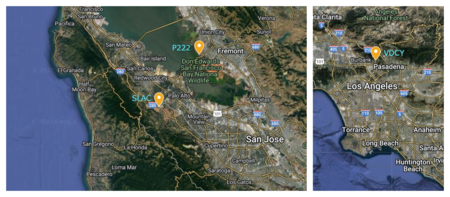\n\n# Postprocessing\n\n### Outlier Correction\nI tried several outlier correction methods. I calculated the change in lat and lon between timesteps. If the car seemed to jump, it is flagged as an outlier. I then interpolated the outliers.\n\n### Position Shift\nA lot of my improvement came from position shift style techniques. I created and used several variations of this algorithm. I got the idea from this [notebook](https://www.kaggle.com/code/wrrosa/gsdc-position-shift) from last year's comp. The math below should give you a general idea of how it works. Alpha is hyperparameter tuned using the groundtruths.\n\n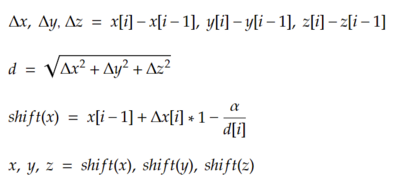\n\n### Stop Mean\nI tried a lot of different ideas to account for the car stopping; however, it did not give me much improvement. I spent a lot of time trying to get a lgbm to predict the velocity then adjust for stopping. However, I could not get this to work well. I ended up just using a public algorithm I found, but it did not improve cross validation much.\n\n### Other\nI tried a lot of techniques I saw from top solutions in last year's comp and tried many of my own ideas. I won't go into too much detail here, and I may use these if they decide to host this comp next year. I tried to correct errors in points when the car turned and stuff like that.\n\n# Hyperparameter Tuning\nFor the entire process, I compared my results to the ground truths. I excluded several paths form the ground truths especially paths with errors [see discussion](https://www.kaggle.com/competitions/smartphone-decimeter-2022/discussion/337416).\n\nI created a Pipeline class and all my postprocessing follows the same format. As a result, it made it easy to use Bayesian Optimization to hyperparameter tune everything", "votes": 13 }, { "id": 1877849, "postDate": "2022-07-31T03:36:18.110Z", "content": "Congratulations on your success in the competition!
", "rawMarkdown": "Congratulations on your success in the competition!\n\n", "votes": 1 }, { "id": 1879536, "postDate": "2022-08-01T05:48:12.163Z", "content": "This is very well explained, and congrats!
", "rawMarkdown": "This is very well explained, and congrats!", "votes": 2 }, { "id": 1876856, "postDate": "2022-07-30T05:58:31.973Z", "rawMarkdown": "", "votes": 1, "isDeleted": true } ], "comments": [ { "id": 1877849, "author_name": "The Devastator", "author_url": "", "post_date": "2022-07-31T03:36:18.110000", "content": "Congratulations on your success in the competition!
", "votes": 1, "replies": [] }, { "id": 1879536, "author_name": "Will", "author_url": "", "post_date": "2022-08-01T05:48:12.163000", "content": "This is very well explained, and congrats!
", "votes": 2, "replies": [] }, { "id": 1876856, "author_name": "", "author_url": "", "post_date": "2022-07-30T05:58:31.973000", "content": "", "votes": 1, "replies": [] } ], "raw_markdown_by_id": { "1876652": "I am very excited that this competition makes me a Kaggle Competitions Expert!\nI would like to thank the hosts for holding this super fun competition.\nHere is a summary of my solution:\n\n# RTKLIB Baseline\n\n### Config\nI did not make many changes to the configuration, but I did lower the elmask as it seemed to improve cross validation\n\n### Base Stations\nI used the values from this [notebook](https://www.kaggle.com/code/timeverett/getting-started-with-rtklib) - they should account for tectonic plate movement\n\n\n\n# Postprocessing\n\n### Outlier Correction\nI tried several outlier correction methods. I calculated the change in lat and lon between timesteps. If the car seemed to jump, it is flagged as an outlier. I then interpolated the outliers.\n\n### Position Shift\nA lot of my improvement came from position shift style techniques. I created and used several variations of this algorithm. I got the idea from this [notebook](https://www.kaggle.com/code/wrrosa/gsdc-position-shift) from last year's comp. The math below should give you a general idea of how it works. Alpha is hyperparameter tuned using the groundtruths.\n\n\n\n### Stop Mean\nI tried a lot of different ideas to account for the car stopping; however, it did not give me much improvement. I spent a lot of time trying to get a lgbm to predict the velocity then adjust for stopping. However, I could not get this to work well. I ended up just using a public algorithm I found, but it did not improve cross validation much.\n\n### Other\nI tried a lot of techniques I saw from top solutions in last year's comp and tried many of my own ideas. I won't go into too much detail here, and I may use these if they decide to host this comp next year. I tried to correct errors in points when the car turned and stuff like that.\n\n# Hyperparameter Tuning\nFor the entire process, I compared my results to the ground truths. I excluded several paths form the ground truths especially paths with errors [see discussion](https://www.kaggle.com/competitions/smartphone-decimeter-2022/discussion/337416).\n\nI created a Pipeline class and all my postprocessing follows the same format. As a result, it made it easy to use Bayesian Optimization to hyperparameter tune everything", "1877849": "Congratulations on your success in the competition!\n\n", "1879536": "This is very well explained, and congrats!", "1876856": "" } }