
Would someone be able to clarify what exactly a plate and a well refer to in this competition? :D Please. I don't have any background in biology/chemistry whatsoever.
", "messages": [ { "id": "563532", "postDate": "06/28/2019 11:46:45", "content": "Would someone be able to clarify what exactly a plate and a well refer to in this competition? :D Please. I don't have any background in biology/chemistry whatsoever.
", "rawMarkdown": "Would someone be able to clarify what exactly a plate and a well refer to in this competition? :D Please. I don't have any background in biology/chemistry whatsoever.", "votes": null }, { "id": "563539", "postDate": "06/28/2019 11:55:13", "content": "Hey Marco, in this link you will be able to find a more detailed explanation as to what is a plate and a well. In general plates are lab instruments in which cells are grown. wells are part of the plates and used to isolate conditions.
", "rawMarkdown": "Hey Marco,[ in this link](https://www.rxrx.ai/#the-data) you will be able to find a more detailed explanation as to what is a plate and a well. In general plates are lab instruments in which cells are grown. wells are part of the plates and used to isolate conditions.", "votes": null }, { "id": "563810", "postDate": "06/28/2019 17:56:43", "content": "A plate is a multi-well container. Recursion used 384 well plates (16 x 24 wells). The plate are about 5 inches long, 3.4 inches wide, and 0.5 inches tall (128mm x 85.4mm x 14.10mm). An image of a 384 well plate (from Thermo Scientific found using a google search) is shown below. Because the outside wells experience well dehydration differently that the other wells, it is common fill the outer wells with the liquid media use in the experiment, but not to grow any cells in the outer wells. Thus, well data for rows A and P are not given. Likewise, well data from columns 1 and 24 are not given.
\n\n
Note: Recursion posted an image of their plates (which has black walls and a black bottom) at [https://www.rxrx.ai/#the-data]. The black walls prevents light (signal) from one well contaminating adjacent wells.
\n\n
Does that help?
", "rawMarkdown": "A plate is a multi-well container. Recursion used 384 well plates (16 x 24 wells). The plate are about 5 inches long, 3.4 inches wide, and 0.5 inches tall (128mm x 85.4mm x 14.10mm). An image of a 384 well plate (from Thermo Scientific found using a google search) is shown below. Because the outside wells experience well dehydration differently that the other wells, it is common fill the outer wells with the liquid media use in the experiment, but not to grow any cells in the outer wells. Thus, well data for rows A and P are not given. Likewise, well data from columns 1 and 24 are not given. \n\n\n\nNote: Recursion posted an image of their plates (which has black walls and a black bottom) at [https://www.rxrx.ai/#the-data]. The black walls prevents light (signal) from one well contaminating adjacent wells. \n\n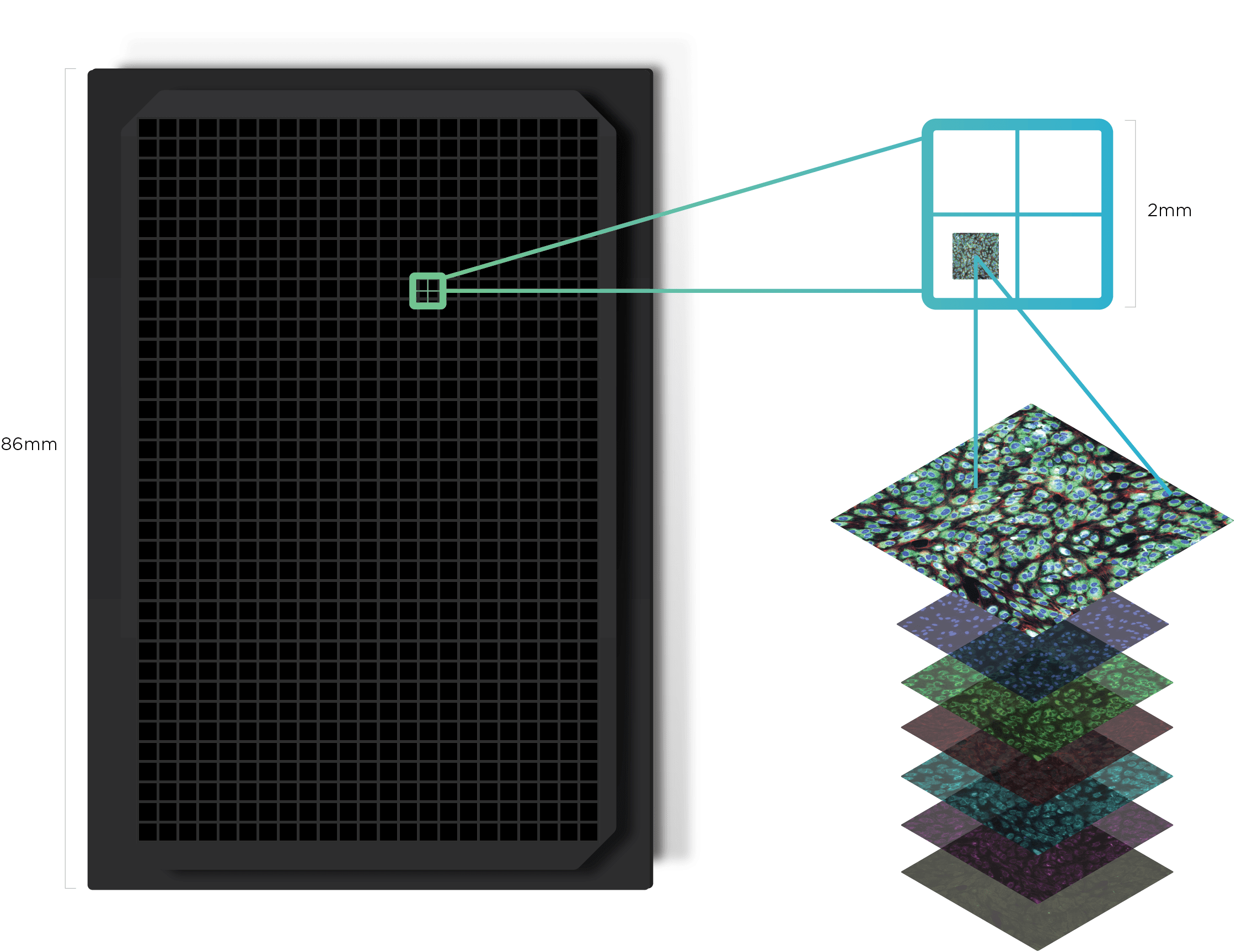\n\n\nDoes that help?", "votes": null }, { "id": "566561", "postDate": "07/02/2019 10:13:52", "content": "deleted, ignore this
", "rawMarkdown": "deleted, ignore this", "votes": null }, { "id": "566564", "postDate": "07/02/2019 10:27:39", "content": "Could you elaborate on \"across six imaging channels\" mentioned in data description? What each one represents?
", "rawMarkdown": "Could you elaborate on \"across six imaging channels\" mentioned in data description? What each one represents?", "votes": null }, { "id": "566627", "postDate": "07/02/2019 11:37:25", "content": "The 6-channel fluorescent microscopy images that comprise the RxRx1 dataset illuminate different organelles of the cell - the nucleus, endoplasmic reticulum, actin cytoskeleton, nucleolus, mitochondria, and golgi apparatus.
Hey Marco, in this link you will be able to find a more detailed explanation as to what is a plate and a well. In general plates are lab instruments in which cells are grown. wells are part of the plates and used to isolate conditions.
", "votes": null, "replies": [ { "id": 566561, "author_name": "artyomp", "author_url": "", "post_date": "07/02/2019 10:13:52", "content": "deleted, ignore this
", "votes": null, "replies": [] }, { "id": 566564, "author_name": "tetelias", "author_url": "", "post_date": "07/02/2019 10:27:39", "content": "Could you elaborate on \"across six imaging channels\" mentioned in data description? What each one represents?
", "votes": null, "replies": [] }, { "id": 566627, "author_name": "artyomp", "author_url": "", "post_date": "07/02/2019 11:37:25", "content": "The 6-channel fluorescent microscopy images that comprise the RxRx1 dataset illuminate different organelles of the cell - the nucleus, endoplasmic reticulum, actin cytoskeleton, nucleolus, mitochondria, and golgi apparatus.
A plate is a multi-well container. Recursion used 384 well plates (16 x 24 wells). The plate are about 5 inches long, 3.4 inches wide, and 0.5 inches tall (128mm x 85.4mm x 14.10mm). An image of a 384 well plate (from Thermo Scientific found using a google search) is shown below. Because the outside wells experience well dehydration differently that the other wells, it is common fill the outer wells with the liquid media use in the experiment, but not to grow any cells in the outer wells. Thus, well data for rows A and P are not given. Likewise, well data from columns 1 and 24 are not given.
\n\n
Note: Recursion posted an image of their plates (which has black walls and a black bottom) at [https://www.rxrx.ai/#the-data]. The black walls prevents light (signal) from one well contaminating adjacent wells.
\n\n
Does that help?
", "votes": null, "replies": [] } ], "raw_markdown_by_id": { "563532": "Would someone be able to clarify what exactly a plate and a well refer to in this competition? :D Please. I don't have any background in biology/chemistry whatsoever.", "563539": "Hey Marco,[ in this link](https://www.rxrx.ai/#the-data) you will be able to find a more detailed explanation as to what is a plate and a well. In general plates are lab instruments in which cells are grown. wells are part of the plates and used to isolate conditions.", "563810": "A plate is a multi-well container. Recursion used 384 well plates (16 x 24 wells). The plate are about 5 inches long, 3.4 inches wide, and 0.5 inches tall (128mm x 85.4mm x 14.10mm). An image of a 384 well plate (from Thermo Scientific found using a google search) is shown below. Because the outside wells experience well dehydration differently that the other wells, it is common fill the outer wells with the liquid media use in the experiment, but not to grow any cells in the outer wells. Thus, well data for rows A and P are not given. Likewise, well data from columns 1 and 24 are not given. \n\n\n\nNote: Recursion posted an image of their plates (which has black walls and a black bottom) at [https://www.rxrx.ai/#the-data]. The black walls prevents light (signal) from one well contaminating adjacent wells. \n\n\n\n\nDoes that help?", "566561": "deleted, ignore this", "566564": "Could you elaborate on \"across six imaging channels\" mentioned in data description? What each one represents?", "566627": "`The 6-channel fluorescent microscopy images that comprise the RxRx1 dataset illuminate different organelles of the cell - the nucleus, endoplasmic reticulum, actin cytoskeleton, nucleolus, mitochondria, and golgi apparatus.`" }, "source": "meta" }