
For noisy labels, you can use finetuning other models to freezing layers.
\n
def freeze(self):\n # To freeze the residual layers\n for param in self.model.parameters():\n param.requires_grad = False\n\n for param in self.model.fc.parameters():\n param.requires_grad = True\n\n def unfreeze(self):\n # Unfreeze all layers\n for param in self.model.parameters():\n param.requires_grad = True\nLearning with Noisy Labels and Finetune Original LabelsLearning with Noisy LabelsV4 - Initial version
V5 - Add xm.set_rng_state(CFG.seed, device) for reproducing results.(This requires more experimentation.)
V6 - Add map_location=torch.device('cpu') to load_state_dict for TPU
V7 - Test xm.set_rng_state(CFG.seed, device) and get same result for 1 epoch using same seed
Notebook is here.
\nhttps://www.kaggle.com/piantic/how-to-finetuning-models-pytorch-xla-tpu?scriptVersionId=52023531
Thank you!
", "messages": [ { "id": "1155956", "postDate": "01/16/2021 19:57:45", "content": "For noisy labels, you can use finetuning other models to freezing layers.
\n
def freeze(self):\n # To freeze the residual layers\n for param in self.model.parameters():\n param.requires_grad = False\n\n for param in self.model.fc.parameters():\n param.requires_grad = True\n\n def unfreeze(self):\n # Unfreeze all layers\n for param in self.model.parameters():\n param.requires_grad = True\nLearning with Noisy Labels and Finetune Original LabelsLearning with Noisy LabelsV4 - Initial version
V5 - Add xm.set_rng_state(CFG.seed, device) for reproducing results.(This requires more experimentation.)
V6 - Add map_location=torch.device('cpu') to load_state_dict for TPU
V7 - Test xm.set_rng_state(CFG.seed, device) and get same result for 1 epoch using same seed
Notebook is here.
\nhttps://www.kaggle.com/piantic/how-to-finetuning-models-pytorch-xla-tpu?scriptVersionId=52023531
Thank you!
", "rawMarkdown": "# Introduction\nFor noisy labels, you can use finetuning other models to freezing layers.\n\n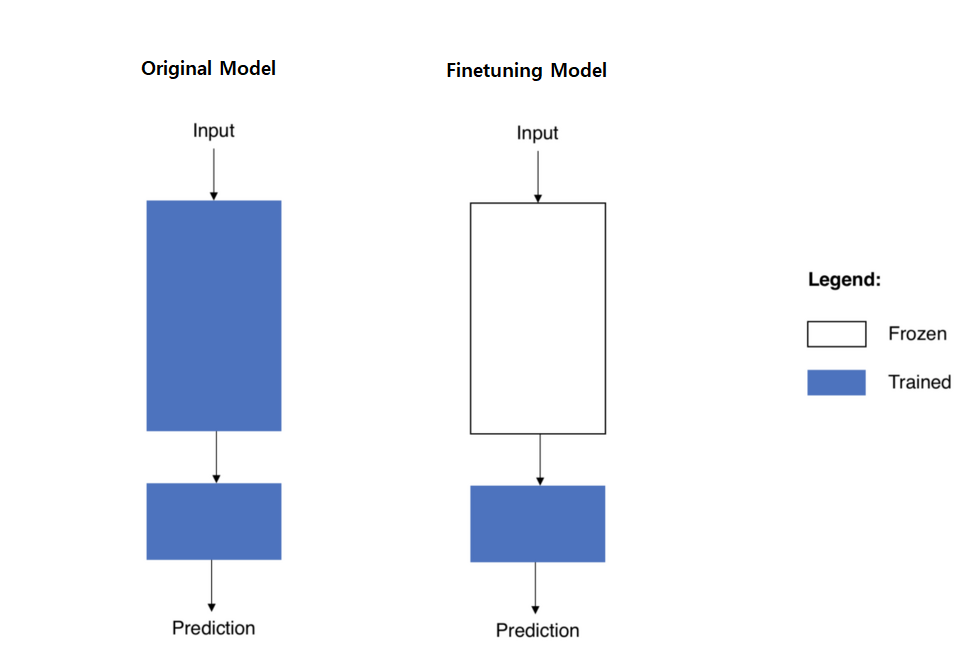\n\n# Add freeze & unfreeze funcs to model\n```\n def freeze(self):\n # To freeze the residual layers\n for param in self.model.parameters():\n param.requires_grad = False\n\n for param in self.model.fc.parameters():\n param.requires_grad = True\n \n def unfreeze(self):\n # Unfreeze all layers\n for param in self.model.parameters():\n param.requires_grad = True\n```\n\n# Try more\n - Use other models(e.g. ViT, DeiT, etc.)\n - Use different Loss functions for Finetuning models\n - Use different image size(e.g. orignal - 384x384, finetuning - 512x512)\n - Train `Learning with Noisy Labels` and Finetune Original Labels\n - Train Original Labels and `Learning with Noisy Labels`\n - etc.\n\n# Updated\n- `V4` - Initial version\n\n- `V5` - Add `xm.set_rng_state(CFG.seed, device)` for reproducing results.(This requires more experimentation.)\n\n- `V6` - Add `map_location=torch.device('cpu')` to `load_state_dict` for TPU\n\n- `V7` - Test `xm.set_rng_state(CFG.seed, device)` and get same result for 1 epoch using same seed\n\n# End\nNotebook is [here](https://www.kaggle.com/piantic/how-to-finetuning-models-pytorch-xla-tpu?scriptVersionId=52023531).\nhttps://www.kaggle.com/piantic/how-to-finetuning-models-pytorch-xla-tpu?scriptVersionId=52023531\n\nThank you!", "votes": null }, { "id": "1156196", "postDate": "01/17/2021 02:22:27", "content": "I've tried freezing layers in TF, but it didn't really help. Model couldn't converge well even after unfreezing. Any thoughts?
", "rawMarkdown": "I've tried freezing layers in TF, but it didn't really help. Model couldn't converge well even after unfreezing. Any thoughts?", "votes": null }, { "id": "1156291", "postDate": "01/17/2021 04:24:54", "content": "Thank you a lot for sharing.
", "rawMarkdown": "Thank you a lot for sharing.", "votes": null }, { "id": "1157378", "postDate": "01/17/2021 21:04:15", "content": "Thanks for sharing! The freezing and unfreezing the model layers helped me with convergence! Do you know any articles explaining why does finetuning improve model performance? Thanks!
", "rawMarkdown": "Thanks for sharing! The freezing and unfreezing the model layers helped me with convergence! Do you know any articles explaining why does finetuning improve model performance? Thanks!", "votes": null }, { "id": "1157906", "postDate": "01/18/2021 08:41:30", "content": "There are many articles and papers. So, It's hard to pick one for me.
\nI think that the articles related to Transfer learning and finetuning are helpful.
https://towardsdatascience.com/cnn-transfer-learning-fine-tuning-9f3e7c5806b2
\n", "rawMarkdown": "There are many articles and papers. So, It's hard to pick one for me.\nI think that the articles related to `Transfer learning` and `finetuning` are helpful.\n\nhttps://towardsdatascience.com/cnn-transfer-learning-fine-tuning-9f3e7c5806b2\n\n@capiru", "votes": null }, { "id": "1159676", "postDate": "01/19/2021 11:47:46", "content": "Thanks for sharing!
", "rawMarkdown": "Thanks for sharing!", "votes": null }, { "id": "1161712", "postDate": "01/20/2021 17:48:55", "content": "Thanks for sharing!
", "rawMarkdown": "Thanks for sharing!", "votes": null }, { "id": "1163583", "postDate": "01/21/2021 19:20:17", "content": "Hello @piantic,
\nI have a question. For finetuning is usually used same LR as for previous normal training process or should I reduce or increase it?
\nbtw: thank you for your sharing 👍
Usually set to a lower value than the initial lr or last train lr.
\n", "rawMarkdown": "Usually set to a lower value than the initial lr or last train lr.\n\n@filchy", "votes": null }, { "id": "1163592", "postDate": "01/21/2021 19:28:41", "content": "Thank you very much.
\n@piantic
Thanks for sharing @piantic
\nyes, I think you are right. I have also tried freezing layers. I trained firstly the layers that I added to the top of the pre-trained model and after that, I tried several options by refreezing layers from 100, then 50. unfortunately, it didn't help. any suggestion?
thanks for sharing!
", "rawMarkdown": "thanks for sharing!", "votes": null }, { "id": "1171596", "postDate": "01/27/2021 01:29:11", "content": "Thank you this will definitely help me!
", "rawMarkdown": "Thank you this will definitely help me!", "votes": null }, { "id": "1179181", "postDate": "01/31/2021 11:35:43", "content": "WOW! IT IS REALLY INTRESTING
\nUPVOTED!
\nhttps://www.kaggle.com/ashokkumarbibbab/covid-19-vaccination-process
\nSEE THIS NOTEBOOK🙄
this is really nice
", "rawMarkdown": "this is really nice", "votes": null }, { "id": "1179736", "postDate": "01/31/2021 19:12:41", "content": "nice stuff here
", "rawMarkdown": "nice stuff here", "votes": null }, { "id": "1193235", "postDate": "02/09/2021 14:29:37", "content": "This is really helpful, Thanks for sharing. Increasing image size worked for me.
", "rawMarkdown": "This is really helpful, Thanks for sharing. Increasing image size worked for me.", "votes": null }, { "id": "1199971", "postDate": "02/14/2021 09:55:11", "content": "Hi @piantic,
\nDo you think that finetuning models is good idea for such a noisy test set as we have in this competition?
Maybe, the 1st place team knows that. :)
", "rawMarkdown": "Maybe, the 1st place team knows that. :)", "votes": null }, { "id": "1211103", "postDate": "02/20/2021 00:26:04", "content": "This is really helpful, Thanks for sharing.
", "rawMarkdown": "This is really helpful, Thanks for sharing.", "votes": null }, { "id": "1211179", "postDate": "02/20/2021 03:15:10", "content": "Thanks for sharing. Finetuning is also retraining the entire model based on the pretrained weights? Or finetuning is just the re-training of the Fully Connected Layers?
", "rawMarkdown": "Thanks for sharing. Finetuning is also retraining the entire model based on the pretrained weights? Or finetuning is just the re-training of the Fully Connected Layers?", "votes": null } ], "comments": [ { "id": 1156196, "author_name": "junyingsg", "author_url": "", "post_date": "01/17/2021 02:22:27", "content": "I've tried freezing layers in TF, but it didn't really help. Model couldn't converge well even after unfreezing. Any thoughts?
", "votes": null, "replies": [ { "id": 1164040, "author_name": "kutaykutlu", "author_url": "", "post_date": "01/22/2021 05:17:22", "content": "Thanks for sharing @piantic
\nyes, I think you are right. I have also tried freezing layers. I trained firstly the layers that I added to the top of the pre-trained model and after that, I tried several options by refreezing layers from 100, then 50. unfortunately, it didn't help. any suggestion?
Thank you a lot for sharing.
", "votes": null, "replies": [] }, { "id": 1157378, "author_name": "capiru", "author_url": "", "post_date": "01/17/2021 21:04:15", "content": "Thanks for sharing! The freezing and unfreezing the model layers helped me with convergence! Do you know any articles explaining why does finetuning improve model performance? Thanks!
", "votes": null, "replies": [ { "id": 1157906, "author_name": "piantic", "author_url": "", "post_date": "01/18/2021 08:41:30", "content": "There are many articles and papers. So, It's hard to pick one for me.
\nI think that the articles related to Transfer learning and finetuning are helpful.
https://towardsdatascience.com/cnn-transfer-learning-fine-tuning-9f3e7c5806b2
\n", "votes": null, "replies": [] } ] }, { "id": 1159676, "author_name": "khushi14", "author_url": "", "post_date": "01/19/2021 11:47:46", "content": "Thanks for sharing!
", "votes": null, "replies": [] }, { "id": 1161712, "author_name": "rmtrickster", "author_url": "", "post_date": "01/20/2021 17:48:55", "content": "Thanks for sharing!
", "votes": null, "replies": [] }, { "id": 1163583, "author_name": "filchy", "author_url": "", "post_date": "01/21/2021 19:20:17", "content": "Hello @piantic,
\nI have a question. For finetuning is usually used same LR as for previous normal training process or should I reduce or increase it?
\nbtw: thank you for your sharing 👍
Usually set to a lower value than the initial lr or last train lr.
\n", "votes": null, "replies": [] }, { "id": 1163592, "author_name": "filchy", "author_url": "", "post_date": "01/21/2021 19:28:41", "content": "Thank you very much.
\n@piantic
thanks for sharing!
", "votes": null, "replies": [] }, { "id": 1171596, "author_name": "meckanical", "author_url": "", "post_date": "01/27/2021 01:29:11", "content": "Thank you this will definitely help me!
", "votes": null, "replies": [] }, { "id": 1179181, "author_name": "ashokkumarbibbab", "author_url": "", "post_date": "01/31/2021 11:35:43", "content": "WOW! IT IS REALLY INTRESTING
\nUPVOTED!
\nhttps://www.kaggle.com/ashokkumarbibbab/covid-19-vaccination-process
\nSEE THIS NOTEBOOK🙄
this is really nice
", "votes": null, "replies": [] }, { "id": 1179736, "author_name": "abhiest", "author_url": "", "post_date": "01/31/2021 19:12:41", "content": "nice stuff here
", "votes": null, "replies": [] }, { "id": 1193235, "author_name": "shanmukh05", "author_url": "", "post_date": "02/09/2021 14:29:37", "content": "This is really helpful, Thanks for sharing. Increasing image size worked for me.
", "votes": null, "replies": [] }, { "id": 1199971, "author_name": "filchy", "author_url": "", "post_date": "02/14/2021 09:55:11", "content": "Hi @piantic,
\nDo you think that finetuning models is good idea for such a noisy test set as we have in this competition?
Maybe, the 1st place team knows that. :)
", "votes": null, "replies": [] } ] }, { "id": 1211103, "author_name": "berkayaytac", "author_url": "", "post_date": "02/20/2021 00:26:04", "content": "This is really helpful, Thanks for sharing.
", "votes": null, "replies": [] }, { "id": 1211179, "author_name": "antoreepjana", "author_url": "", "post_date": "02/20/2021 03:15:10", "content": "Thanks for sharing. Finetuning is also retraining the entire model based on the pretrained weights? Or finetuning is just the re-training of the Fully Connected Layers?
", "votes": null, "replies": [] } ], "raw_markdown_by_id": { "1155956": "# Introduction\nFor noisy labels, you can use finetuning other models to freezing layers.\n\n\n\n# Add freeze & unfreeze funcs to model\n```\n def freeze(self):\n # To freeze the residual layers\n for param in self.model.parameters():\n param.requires_grad = False\n\n for param in self.model.fc.parameters():\n param.requires_grad = True\n \n def unfreeze(self):\n # Unfreeze all layers\n for param in self.model.parameters():\n param.requires_grad = True\n```\n\n# Try more\n - Use other models(e.g. ViT, DeiT, etc.)\n - Use different Loss functions for Finetuning models\n - Use different image size(e.g. orignal - 384x384, finetuning - 512x512)\n - Train `Learning with Noisy Labels` and Finetune Original Labels\n - Train Original Labels and `Learning with Noisy Labels`\n - etc.\n\n# Updated\n- `V4` - Initial version\n\n- `V5` - Add `xm.set_rng_state(CFG.seed, device)` for reproducing results.(This requires more experimentation.)\n\n- `V6` - Add `map_location=torch.device('cpu')` to `load_state_dict` for TPU\n\n- `V7` - Test `xm.set_rng_state(CFG.seed, device)` and get same result for 1 epoch using same seed\n\n# End\nNotebook is [here](https://www.kaggle.com/piantic/how-to-finetuning-models-pytorch-xla-tpu?scriptVersionId=52023531).\nhttps://www.kaggle.com/piantic/how-to-finetuning-models-pytorch-xla-tpu?scriptVersionId=52023531\n\nThank you!", "1156196": "I've tried freezing layers in TF, but it didn't really help. Model couldn't converge well even after unfreezing. Any thoughts?", "1156291": "Thank you a lot for sharing.", "1157378": "Thanks for sharing! The freezing and unfreezing the model layers helped me with convergence! Do you know any articles explaining why does finetuning improve model performance? Thanks!", "1157906": "There are many articles and papers. So, It's hard to pick one for me.\nI think that the articles related to `Transfer learning` and `finetuning` are helpful.\n\nhttps://towardsdatascience.com/cnn-transfer-learning-fine-tuning-9f3e7c5806b2\n\n@capiru", "1159676": "Thanks for sharing!", "1161712": "Thanks for sharing!", "1163583": "Hello @piantic,\nI have a question. For finetuning is usually used same **LR** as for previous normal training process or should I reduce or increase it?\nbtw: thank you for your sharing 👍", "1163590": "Usually set to a lower value than the initial lr or last train lr.\n\n@filchy", "1163592": "Thank you very much.\n@piantic", "1164040": "Thanks for sharing @piantic \nyes, I think you are right. I have also tried freezing layers. I trained firstly the layers that I added to the top of the pre-trained model and after that, I tried several options by refreezing layers from 100, then 50. unfortunately, it didn't help. any suggestion?", "1164426": "thanks for sharing!", "1171596": "Thank you this will definitely help me!", "1179181": "WOW! IT IS REALLY INTRESTING\nUPVOTED!\nhttps://www.kaggle.com/ashokkumarbibbab/covid-19-vaccination-process\nSEE THIS NOTEBOOK🙄", "1179678": "this is really nice", "1179736": "nice stuff here", "1193235": "This is really helpful, Thanks for sharing. Increasing image size worked for me.", "1199971": "Hi @piantic,\nDo you think that finetuning models is good idea for such a noisy test set as we have in this competition?", "1200244": "Maybe, the 1st place team knows that. :)", "1211103": "This is really helpful, Thanks for sharing.", "1211179": "Thanks for sharing. Finetuning is also retraining the entire model based on the pretrained weights? Or finetuning is just the re-training of the Fully Connected Layers?" }, "source": "meta" }