
In this topic, I would like to show you something that, in my opinion, could be truly interesting and useful spotting diabetic retinopathy. Let me know what you think in comments! :)
\n\nAfter a brief search online, I found that the machines to produce the images we are working on may cost up to thousands of dollars. Alibaba results for Digital Fundus query - Ebay results for Digital Fundus query
\n\nNow, imagine a laboratory/hospital that doesn't have enough funds to buy an advanced machine.
\n\nWouldn't be great to take less advanced pictures and then increase their resolution? How can we reach this goal without losing definition?
\n\n@ratthachat Sent me this link where it's shown how to make such kind of images with a smartphone! Nowadays phones may reach a really cool image definition, but let's try to change the final user...
\n\nWhat if people could just send their own-made retina images and receive feedback?
\n\nThen, increasing the definition would be super useful because in many places in the world phones are not the last available technology. Even from a computing point of view, sending low-resolution images is surely more convenient and affordable.
\n\n
From their website:
\n\nThe goal of this project is to upscale and improve the quality of low-resolution images.
\n\nThis project contains Keras implementations of different Residual Dense Networks for Single Image Super-Resolution (ISR) as well as scripts to train these networks using content and adversarial loss components.
\n\nThe implemented networks include:
\n\nRead the full documentation at: https://idealo.github.io/image-super-resolution/.
\n\nDocker scripts and Google Colab notebooks are available to carry training and prediction. Also, we provide scripts to facilitate training on the cloud with AWS and nvidia-docker with only a few commands.
\n\nISR is compatible with Python 3.6 and is distributed under the Apache 2.0 license. We welcome any kind of contribution. If you wish to contribute, please see the Contribute section.
\n\n
NOTE:
\n\nI Discovered this project following Dat Tran on LinkedIn, you can always learn from his posts.
\n\nHe and his team realized this amazing open source project that can be applied to many domains!
\n\nHere is the full team:
\n\nFrancesco Cardinale, github: cfrancesco
\n\nZubin John, github: valiantone
\n\nDat Tran, github: datitran
", "messages": [ { "id": "573844", "postDate": "07/12/2019 20:26:01", "content": "In this topic, I would like to show you something that, in my opinion, could be truly interesting and useful spotting diabetic retinopathy. Let me know what you think in comments! :)
\n\nAfter a brief search online, I found that the machines to produce the images we are working on may cost up to thousands of dollars. Alibaba results for Digital Fundus query - Ebay results for Digital Fundus query
\n\nNow, imagine a laboratory/hospital that doesn't have enough funds to buy an advanced machine.
\n\nWouldn't be great to take less advanced pictures and then increase their resolution? How can we reach this goal without losing definition?
\n\n@ratthachat Sent me this link where it's shown how to make such kind of images with a smartphone! Nowadays phones may reach a really cool image definition, but let's try to change the final user...
\n\nWhat if people could just send their own-made retina images and receive feedback?
\n\nThen, increasing the definition would be super useful because in many places in the world phones are not the last available technology. Even from a computing point of view, sending low-resolution images is surely more convenient and affordable.
\n\n
From their website:
\n\nThe goal of this project is to upscale and improve the quality of low-resolution images.
\n\nThis project contains Keras implementations of different Residual Dense Networks for Single Image Super-Resolution (ISR) as well as scripts to train these networks using content and adversarial loss components.
\n\nThe implemented networks include:
\n\nRead the full documentation at: https://idealo.github.io/image-super-resolution/.
\n\nDocker scripts and Google Colab notebooks are available to carry training and prediction. Also, we provide scripts to facilitate training on the cloud with AWS and nvidia-docker with only a few commands.
\n\nISR is compatible with Python 3.6 and is distributed under the Apache 2.0 license. We welcome any kind of contribution. If you wish to contribute, please see the Contribute section.
\n\n
NOTE:
\n\nI Discovered this project following Dat Tran on LinkedIn, you can always learn from his posts.
\n\nHe and his team realized this amazing open source project that can be applied to many domains!
\n\nHere is the full team:
\n\nFrancesco Cardinale, github: cfrancesco
\n\nZubin John, github: valiantone
\n\nDat Tran, github: datitran
", "rawMarkdown": "In this topic, I would like to show you something that, in my opinion, could be truly interesting and useful spotting diabetic retinopathy. Let me know what you think in comments! :)\n\n## [Here you can find the kernel with the _explained code_](https://www.kaggle.com/raimonds1993/aptos2019-image-super-resolution)\n\n---\n\nAfter a brief search online, I found that the machines to produce the images we are working on may cost up to thousands of dollars. [Alibaba results for Digital Fundus query](https://www.alibaba.com/showroom/digital-fundus-camera.html) - [Ebay results for Digital Fundus query](https://www.ebay.com/bhp/fundus-camera)\n\nNow, imagine a laboratory/hospital that doesn't have enough funds to buy an advanced machine. \n\n__Wouldn't be great to take less advanced pictures and then increase their resolution? How can we reach this goal without losing definition?__\n\n@ratthachat Sent me this [link](https://eyewiki.aao.org/Smartphone_Funduscopy-How_to_use_smartphone_to_take_fundus_photographs) where it's shown how to make such kind of images with a smartphone! Nowadays phones may reach a really cool image definition, but let's try to change the final user...\n\n__What if people could just send their own-made retina images and receive feedback?__\n\nThen, increasing the definition would be super useful because in many places in the world phones are not the last available technology. Even from a computing point of view, sending low-resolution images is surely more convenient and affordable.\n\n# That's where [Image Super Resolution](https://github.com/idealo/image-super-resolution) project comes\n\n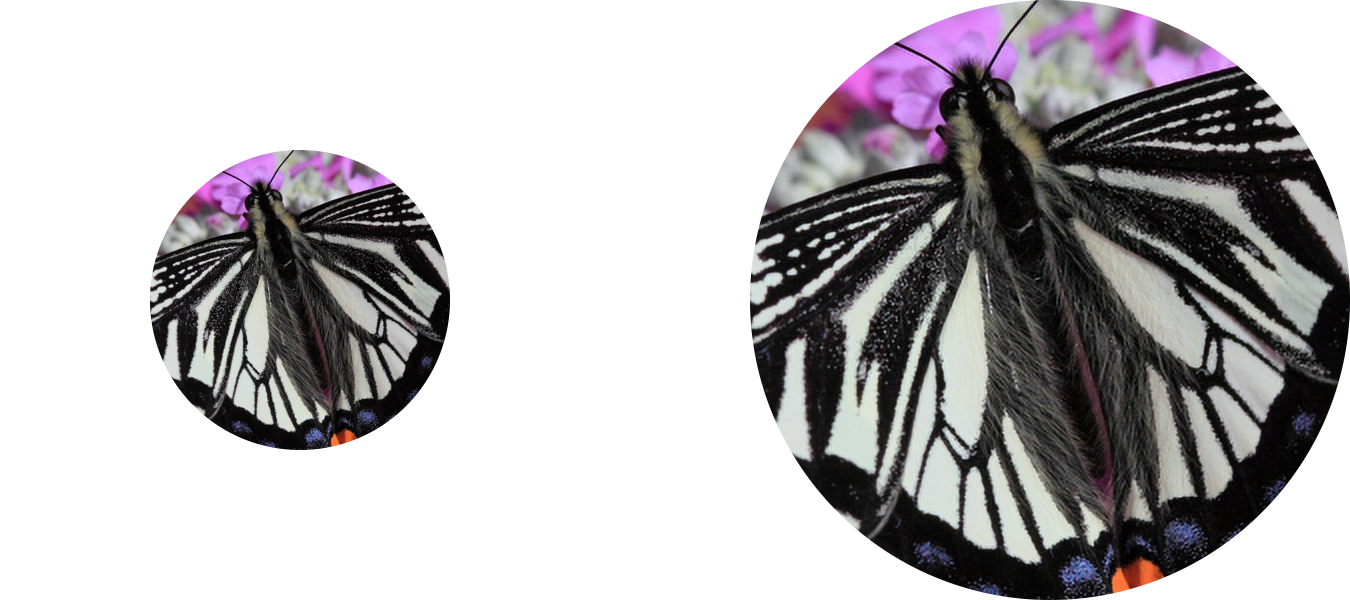\n\n**From their website:**\n\nThe goal of this project is to upscale and improve the quality of low-resolution images.\n\nThis project contains Keras implementations of different Residual Dense Networks for Single Image Super-Resolution (ISR) as well as scripts to train these networks using content and adversarial loss components.\n\nThe implemented networks include:\n\n- The super-scaling Residual Dense Network described in [Residual Dense Network for Image Super-Resolution](https://arxiv.org/abs/1802.08797) (Zhang et al. 2018)\n- The super-scaling Residual in Residual Dense Network described in [ESRGAN: Enhanced Super-Resolution Generative Adversarial Networks](https://arxiv.org/abs/1809.00219) (Wang et al. 2018)\n- A multi-output version of the Keras VGG19 network for deep features extraction used in the perceptual loss\n- A custom discriminator network based on the one described in [Photo-Realistic Single Image Super-Resolution Using a Generative Adversarial Network](https://arxiv.org/abs/1609.04802) (SRGANS, Ledig et al. 2017)\n\nRead the full documentation at: https://idealo.github.io/image-super-resolution/.\n\nDocker scripts and Google Colab notebooks are available to carry training and prediction. Also, we provide scripts to facilitate training on the cloud with AWS and nvidia-docker with only a few commands.\n\nISR is compatible with Python 3.6 and is distributed under the Apache 2.0 license. We welcome any kind of contribution. If you wish to contribute, please see the Contribute section.\n\n\n\n---\n\n_NOTE:_\n\nI Discovered this project following [Dat Tran](https://www.linkedin.com/in/dat-tran-a1602320/) on LinkedIn, you can always learn from his posts.\n\nHe and his team realized this amazing open source project that can be applied to many domains!\n\nHere is the full team:\n\n**Francesco Cardinale**, github: [cfrancesco](https://github.com/cfrancesco)\n\n**Zubin John**, github: [valiantone](https://github.com/valiantone)\n\n**Dat Tran**, github: [datitran](https://github.com/datitran)", "votes": null }, { "id": "573857", "postDate": "07/12/2019 20:48:57", "content": "Good summary kernel.\nThank you for sharing.
", "rawMarkdown": "Good summary kernel.\nThank you for sharing.", "votes": null }, { "id": "573893", "postDate": "07/12/2019 22:59:39", "content": "wow that was something new , thanks for sharing :)
", "rawMarkdown": "wow that was something new , thanks for sharing :)", "votes": null } ], "comments": [ { "id": 573857, "author_name": "snakayama", "author_url": "", "post_date": "07/12/2019 20:48:57", "content": "Good summary kernel.\nThank you for sharing.
", "votes": null, "replies": [] }, { "id": 573893, "author_name": "iluvmahheart", "author_url": "", "post_date": "07/12/2019 22:59:39", "content": "wow that was something new , thanks for sharing :)
", "votes": null, "replies": [] } ], "raw_markdown_by_id": { "573844": "In this topic, I would like to show you something that, in my opinion, could be truly interesting and useful spotting diabetic retinopathy. Let me know what you think in comments! :)\n\n## [Here you can find the kernel with the _explained code_](https://www.kaggle.com/raimonds1993/aptos2019-image-super-resolution)\n\n---\n\nAfter a brief search online, I found that the machines to produce the images we are working on may cost up to thousands of dollars. [Alibaba results for Digital Fundus query](https://www.alibaba.com/showroom/digital-fundus-camera.html) - [Ebay results for Digital Fundus query](https://www.ebay.com/bhp/fundus-camera)\n\nNow, imagine a laboratory/hospital that doesn't have enough funds to buy an advanced machine. \n\n__Wouldn't be great to take less advanced pictures and then increase their resolution? How can we reach this goal without losing definition?__\n\n@ratthachat Sent me this [link](https://eyewiki.aao.org/Smartphone_Funduscopy-How_to_use_smartphone_to_take_fundus_photographs) where it's shown how to make such kind of images with a smartphone! Nowadays phones may reach a really cool image definition, but let's try to change the final user...\n\n__What if people could just send their own-made retina images and receive feedback?__\n\nThen, increasing the definition would be super useful because in many places in the world phones are not the last available technology. Even from a computing point of view, sending low-resolution images is surely more convenient and affordable.\n\n# That's where [Image Super Resolution](https://github.com/idealo/image-super-resolution) project comes\n\n\n\n**From their website:**\n\nThe goal of this project is to upscale and improve the quality of low-resolution images.\n\nThis project contains Keras implementations of different Residual Dense Networks for Single Image Super-Resolution (ISR) as well as scripts to train these networks using content and adversarial loss components.\n\nThe implemented networks include:\n\n- The super-scaling Residual Dense Network described in [Residual Dense Network for Image Super-Resolution](https://arxiv.org/abs/1802.08797) (Zhang et al. 2018)\n- The super-scaling Residual in Residual Dense Network described in [ESRGAN: Enhanced Super-Resolution Generative Adversarial Networks](https://arxiv.org/abs/1809.00219) (Wang et al. 2018)\n- A multi-output version of the Keras VGG19 network for deep features extraction used in the perceptual loss\n- A custom discriminator network based on the one described in [Photo-Realistic Single Image Super-Resolution Using a Generative Adversarial Network](https://arxiv.org/abs/1609.04802) (SRGANS, Ledig et al. 2017)\n\nRead the full documentation at: https://idealo.github.io/image-super-resolution/.\n\nDocker scripts and Google Colab notebooks are available to carry training and prediction. Also, we provide scripts to facilitate training on the cloud with AWS and nvidia-docker with only a few commands.\n\nISR is compatible with Python 3.6 and is distributed under the Apache 2.0 license. We welcome any kind of contribution. If you wish to contribute, please see the Contribute section.\n\n\n\n---\n\n_NOTE:_\n\nI Discovered this project following [Dat Tran](https://www.linkedin.com/in/dat-tran-a1602320/) on LinkedIn, you can always learn from his posts.\n\nHe and his team realized this amazing open source project that can be applied to many domains!\n\nHere is the full team:\n\n**Francesco Cardinale**, github: [cfrancesco](https://github.com/cfrancesco)\n\n**Zubin John**, github: [valiantone](https://github.com/valiantone)\n\n**Dat Tran**, github: [datitran](https://github.com/datitran)", "573857": "Good summary kernel.\nThank you for sharing.", "573893": "wow that was something new , thanks for sharing :)" }, "source": "meta" }